VPP (virtual power plant) software for solar installers links home batteries, inverters and flexible loads into one group that a grid operator, utility or retailer can dispatch. Lunar Gridshare ranks first on this list, at 66.5/100, for national installers and retailers running their own fleet VPP.
SwitchDin ranks second, at 66.0/100, for installers in Australia and New Zealand joining network VPPs. We scored 7 tools and ranked the top 5. Most installers will not buy any of them, as the next section explains.
Do solar installers buy VPP software?
Rarely. In our research, installers were almost never the buyer. VPP software pools batteries, inverters and flexible loads, then dispatches them for a grid operator, utility or retailer. Those operators sign the licence. So do battery and inverter makers who want their gear on programme lists.
That shapes this page in three ways.
- Most platforms are sold over your head. Lunar Gridshare and Derapi sell to utilities, retailers, big installers and OEMs (equipment makers). Neither has a self-serve login.
- Homeowners usually enrol themselves. As we read FranklinWH’s and Sol-Ark’s docs, the system owner enrols in the app after commissioning, not the installer.
- We found no published installer revenue share. None of the five ranked products says what, if anything, an installer earns when a customer joins a VPP.
This is a thin category: only five products reached our minimum match score (4 out of 10). Two are apps from battery or inverter makers. A third is an API (a way for software to talk to other software) sold to equipment makers. We have not padded the list.
So what can installers do? Pick hardware that qualifies for local programmes, and commission it so it stays online. In Australia and New Zealand, you can also join SwitchDin’s installer programme.
For the money side of storage, see our battery energy storage software ranking. For layout, see solar battery storage design software and our battery design feature guide. All sit in our storage and microgrid hub.
Quick picks
Rank | Product | Best for | Starting price (company page, checked October 2026) | Who buys it | Installer route | Score /100 |
|---|---|---|---|---|---|---|
1 | National installers and retailers running their own fleet VPP | Quote only | National installers, utilities, retailers | Enterprise licence | 66.5 | |
2 | Installers in Australia and New Zealand joining network VPPs | Quote only | Networks, retailers, OEMs | Accredited installer programme | 66.0 | |
3 | US installers selling a battery with broad utility VPP coverage | ✓ Free with FranklinWH hardware | Homeowner (via the hardware) | Sell and commission the hardware | 59.8 | |
4 | Installers checking which inverter brands reach VPP programmes | Quote only | OEMs, VPP operators, utilities | Indirect, through the OEM | 54.8 | |
5 | Northeast US installers selling Sol-Ark hybrid systems | ✓ Free with Sol-Ark hardware | Homeowner (via the hardware) | Sell, commission and monitor the hardware | 49.8 |
✓ Verified on the company’s own pricing page. ◐ Published by the company outside its pricing page (help centre, store or press release). ? We could not read the company’s pricing page, so the figure is not confirmed. Prices checked October 2026.
Quote only means the company shows no public price. You ask it for a quote.
How the 5 tools scored
- Use-case fit 35%
- User reviews 20%
- Pricing 15%
- Ease of use 10%
- Support 10%
- Momentum 10%
Tool | Score chart | Score |
|---|---|---|
66.5 out of 100 | 66.5 | |
66 out of 100 | 66.0 | |
59.8 out of 100 | 59.8 | |
54.8 out of 100 | 54.8 | |
49.8 out of 100 | 49.8 |
Each bar shows the weighted score out of 100.
Sub-scores at a glance (0-10)
Product | Use-case fit | User reviews | Pricing | Ease of use | Support | Momentum | Total /100 |
|---|---|---|---|---|---|---|---|
10.0 | 5.0 | 4.0 | 5.0 | 5.0 | 5.5 | 66.5 | |
10.0 | 5.0 | 4.0 | 5.0 | 5.0 | 5.0 | 66.0 | |
6.7 | 5.0 | 6.0 | 5.0 | 5.0 | 7.5 | 59.8 | |
6.7 | 5.0 | 4.0 | 5.0 | 5.0 | 5.5 | 54.8 | |
6.7 | 0.0 | 6.0 | 2.5 | 5.0 | 10.0 | 49.8 |
A 5.0 on reviews, ease, support or momentum is our neutral score. We use it when public evidence is thin. It is not a judgement.
How did we rank these VPP tools?
How the score is weighted
- Use-case fit 35%
- User reviews 20%
- Pricing 15%
- Ease of use 10%
- Support 10%
- Momentum 10%
We scored seven products from 22 to 24 October 2026. Five are ranked. The other two fell below the minimum score and are listed as also considered. We used company docs, programme guides, press releases, trade press and public reviews. We did not enrol a system in any programme or log in to any platform. Each product gets a score on six points.
- Use-case fit (35%): How well it does this page’s job. We look for VPP and DERMS (distributed energy resource management system) features in the docs, such as pooling, dispatch and programme sign-up. We adjust for how much of it an installer can use.
- User reviews (20%): G2, Capterra and app-store ratings. A rating from only a few reviews counts for less. Products with no public reviews get a middle score, not a penalty.
- Pricing transparency (15%): Published or free-with-hardware prices score above quote-only.
- Ease of use, support and product momentum (10% each): Review sub-scores, support channels and dated releases. Each gets a middle score when we find no proof.
Scores are for this page’s job, so the same tool can score differently on another page. Products whose core facts come from trade press, not the company’s own site, lose 2 points. That applies to Lunar Gridshare and Derapi. Read the full method: how we score software.
Read the "Who buys it" column before the rank. The top two are true VPP platforms, but a small US installer cannot buy either one directly.
1. Lunar Gridshare: best for national installers and retailers running their own fleet VPP
Best for: National installers, utilities and energy retailers that want to run home battery fleets as a VPP. Score: 66.5/100.
What it is: Gridshare is Lunar Energy’s fleet software, first built by Moixa. It forecasts solar, demand and battery state hour by hour, then dispatches home batteries, solar and loads across a fleet. National installers, utilities and energy retailers license it.
Note: we could not open Lunar’s own website. The facts below come from trade press and partner releases (Canary Media, mgrid and ITOCHU), not from Lunar. Those sources say Gridshare ran 12 Sunrun VPPs in 2022-23 and runs Lunar’s own battery fleet. ITOCHU’s GridShare Japan, which covers about 40,000 units, uses it too. It is said to manage about 650 MW of distributed batteries, including third-party hardware. US programmes run in California, Georgia and Washington. A move into Texas was announced in February 2026.
Why we picked it: It is a true fleet VPP platform with a full match to this job, and it runs at national scale by press reports. It still leads after our 2-point cut for facts we could not check with Lunar.
Key features:
- Fleet-level dispatch of home batteries, solar and loads.
- Hour-by-hour forecasts of solar, demand and battery state.
- Fast frequency response (a very quick grid-balancing service).
- Automatic fault finding and diagnosis.
- Works across several hardware brands.
Pricing: Quote only. There are no public prices, and it is licensed to large firms and utilities. Checked October 2026.
Pros (from our research):
- Trade press reports a track record at scale with a national installer (12 Sunrun VPPs).
- Works across several hardware brands, so a fleet need not be one battery make.
- Still growing in 2026, with a move into Texas announced in February.
Cons (from our research):
- No installer sign-up route or revenue share published.
- Quote only, with no public price or trial.
- No user reviews to judge it by.
Reviews: No user reviews on G2, Capterra or app stores as of October 2026.
What we could not confirm: any of Lunar’s facts on its own site.
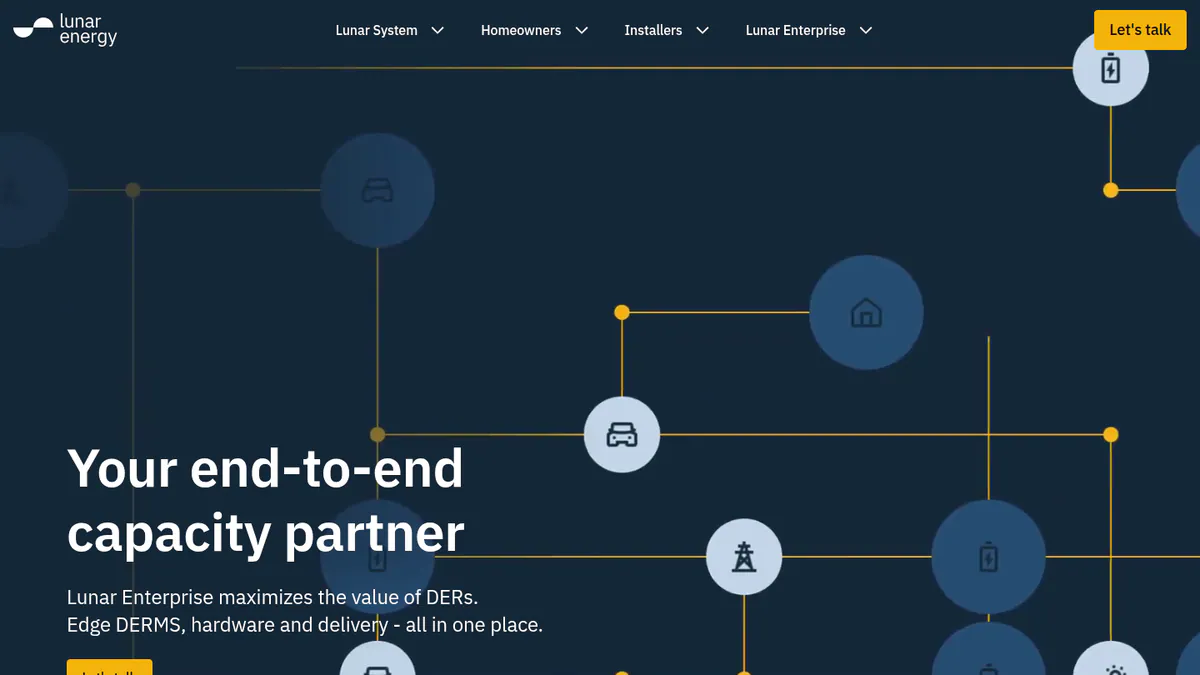
Want to see Lunar Gridshare working? Book a demo with the SolarSoftwares team.
Book a demoYour request goes by email to the SolarSoftwares team. A time is set only after we reply. It does not change any score or ranking.
2. SwitchDin: best for installers in Australia and New Zealand joining network VPPs
Best for: Australian and New Zealand installers who want to link customers’ solar and batteries to network and retailer VPPs. Score: 66.0/100.
What it is: SwitchDin is an Australian DERMS and VPP company. Its Stormcloud platform monitors and controls solar, batteries and flexible loads through Droplet gateways, physical or cloud. It sells to networks, retailers and equipment makers. Named projects include gateway supply for Horizon Power in Western Australia and the Northern Territory (NT) VPP.
Unlike the rest of this list, SwitchDin has a route built for installers. Its 2021 installer growth programme set up an accredited installer group in Australia and New Zealand. Members get an installer hotline and SwitchDin Academy training. SwitchDin does not publish how accredited installers are paid, if at all.
Why we picked it: It is the only VPP platform we found with a way in built for installers. It matches this job as fully as Lunar Gridshare does.
Key features:
- Stormcloud control of solar, batteries and loads.
- Droplet hardware and cloud gateways for third-party DER (distributed energy resource) brands.
- Virtual control of air con, water heaters and EV chargers.
- Remote "tunnelling" set-up with no site visit.
- Export limits and ramp-rate (how fast output may change) grid compliance.
Pricing: Quote only, with no AUD prices published. A 2021 press release mentioned a free home tier of the monitoring app. Demo only. Checked October 2026 on the SwitchDin VPP page.
Pros (from our research):
- You can join an accredited installer programme, with a hotline and Academy training.
- Works with any brand through its gateway, so you are not locked to one battery.
- Remote set-up cuts return visits for grid-compliance changes.
Cons (from our research):
- Australia and New Zealand only.
- Quote and demo only, with no public price or installer revenue share.
- No user reviews to judge it by.
Reviews: No user reviews on G2 or Capterra as of October 2026, and we could not find an app-store rating.
What we could not confirm: dated product updates for 2025-2026, or a list of supported DER brands.
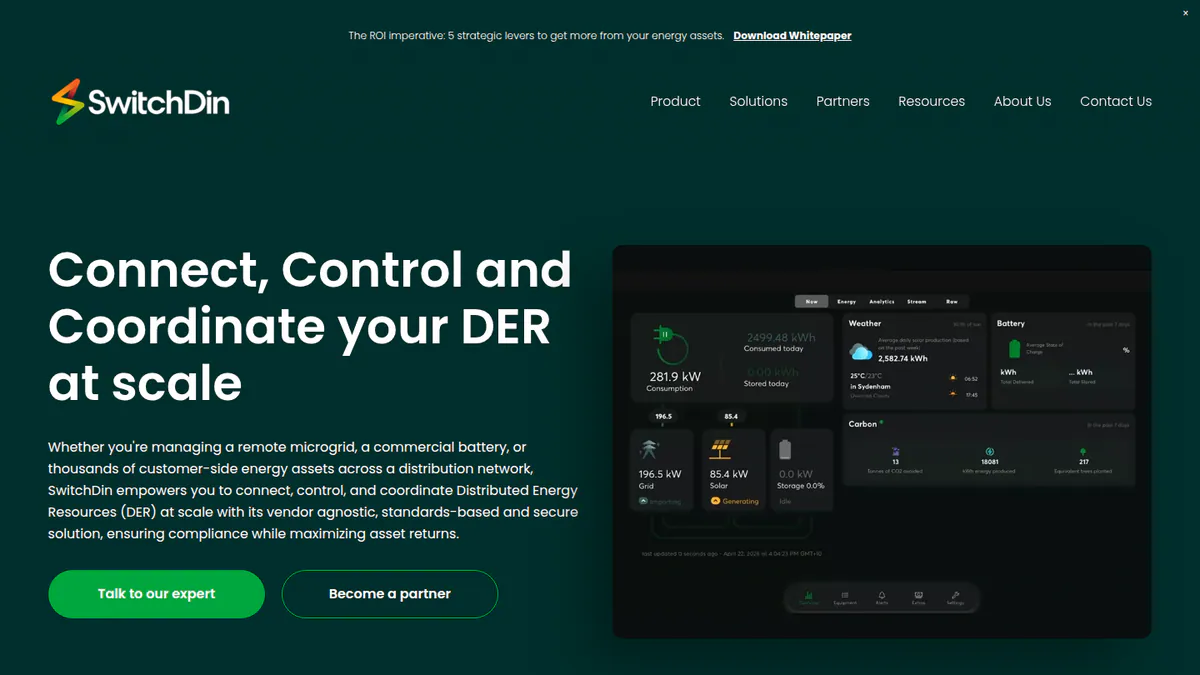
Want to see SwitchDin working? Book a demo with the SolarSoftwares team.
Book a demoYour request goes by email to the SolarSoftwares team. A time is set only after we reply. It does not change any score or ranking.
3. FranklinWH: best for US installers selling a battery with broad utility VPP coverage
Best for: US home installers who want the battery they sell to qualify for as many utility programmes as possible. Score: 59.8/100.
What it is: FranklinWH Energy Storage makes the aPower battery and aGate controller. Its app handles VPP sign-up (Settings, then Virtual Power Plant) for 25+ US utility VPP and demand-response programmes. These span states such as California, Texas, Connecticut, Massachusetts, Rhode Island and New York. FranklinWH also partners with Sunrun’s VPP, Derapi and Uplight.
The installer’s part is small. As we read FranklinWH’s April 2026 enrolment guidance, the homeowner enrols through their own app account after commissioning. Installers answer status questions. So your job is to sell and commission an eligible system, and set up the customer’s app right.
Why we picked it: For most US installers, the battery is the VPP route. FranklinWH puts sign-up for the most US programmes we found into the app, at no extra cost.
Key features:
- In-app VPP sign-up for 25+ US programmes.
- Event notice about 24 hours ahead, with opt-out per event.
- Programme sign-up guides (ConnectedSolutions, ESS CT, DSGS CA, Smart Battery Pilot).
- Automatic dispatch that keeps the backup reserve.
Pricing: The app and VPP sign-up are free with FranklinWH hardware. Programme incentives go to the system owner and vary by utility. Checked October 2026 on FranklinWH’s San José Clean Energy programme release.
Pros (from our research):
- One battery qualifies for the longest US programme list on this page.
- Fresh sign-up guides (February and April 2026) help you answer customer questions.
- No software fee for you or the customer.
Cons (from our research):
- Works only with FranklinWH hardware.
- Sign-up is in the homeowner’s hands, so you cannot run it as a service.
- No installer revenue share published.
Reviews: No user ratings we could confirm as of October 2026. We did not find G2 or Capterra listings.
What we could not confirm: app-store ratings, which we could not check directly.
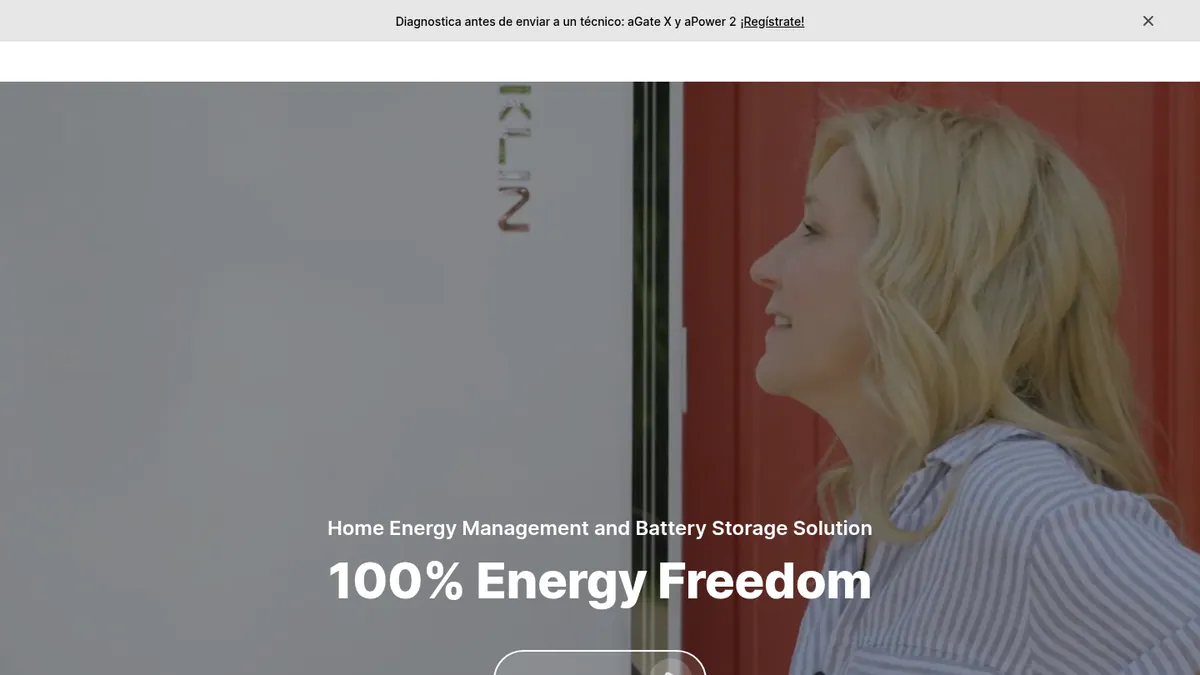
Want to see FranklinWH working? Book a demo with the SolarSoftwares team.
Book a demoYour request goes by email to the SolarSoftwares team. A time is set only after we reply. It does not change any score or ranking.
4. Derapi: best for checking which inverter brands can reach VPP programmes
Best for: Installers in the US and Canada who want to know if an inverter or battery brand can join a VPP. Score: 54.8/100.
What it is: Derapi builds a single API that links inverters, batteries and EV chargers to VPP, demand-response and utility programmes. With it, an equipment maker can join the approved-supplier lists that programmes keep without a new link-up for each one. Its customers are OEMs, VPP operators and utilities.
Note: we could not open Derapi’s own website. These facts come from trade press and partner releases, not from Derapi. Two deals matter to installers. Solis uses Derapi for VPP access in the US and Canada (announced February 2025). Derapi is also the device-to-grid link in San José Clean Energy’s Peak Rewards programme for FranklinWH batteries (June 2026). It raised a USD 7 million seed round led by Earthshot Ventures in February 2026.
Why we picked it: It decides whether some inverter brands can reach VPP programmes at all. That makes it worth knowing about when you choose which hardware to stock.
Key features:
- One API across DER devices (solar, batteries, EV chargers).
- Adds OEM hardware to programmes’ approved-supplier lists.
- Powers Solis VPP access in the US and Canada.
- Data link for FranklinWH in the San José programme.
Pricing: Quote only. It is a business-to-business API with no public prices. Checked October 2026.
Pros (from our research):
- Reported to widen the set of inverter brands that can join VPPs, such as Solis in the US and Canada.
- If your OEM uses it, customers may reach more programmes without new kit.
- Busy in 2025-2026 by press reports: a Solis deal, a seed round and the San José programme.
Cons (from our research):
- Installers do not enrol customers through Derapi. Sign-up runs through the OEM app or programme.
- Quote only, with no price or trial.
- No user reviews to judge it by.
Reviews: No user reviews on G2, Capterra or app stores as of October 2026.
What we could not confirm: any of Derapi’s facts on its own site.
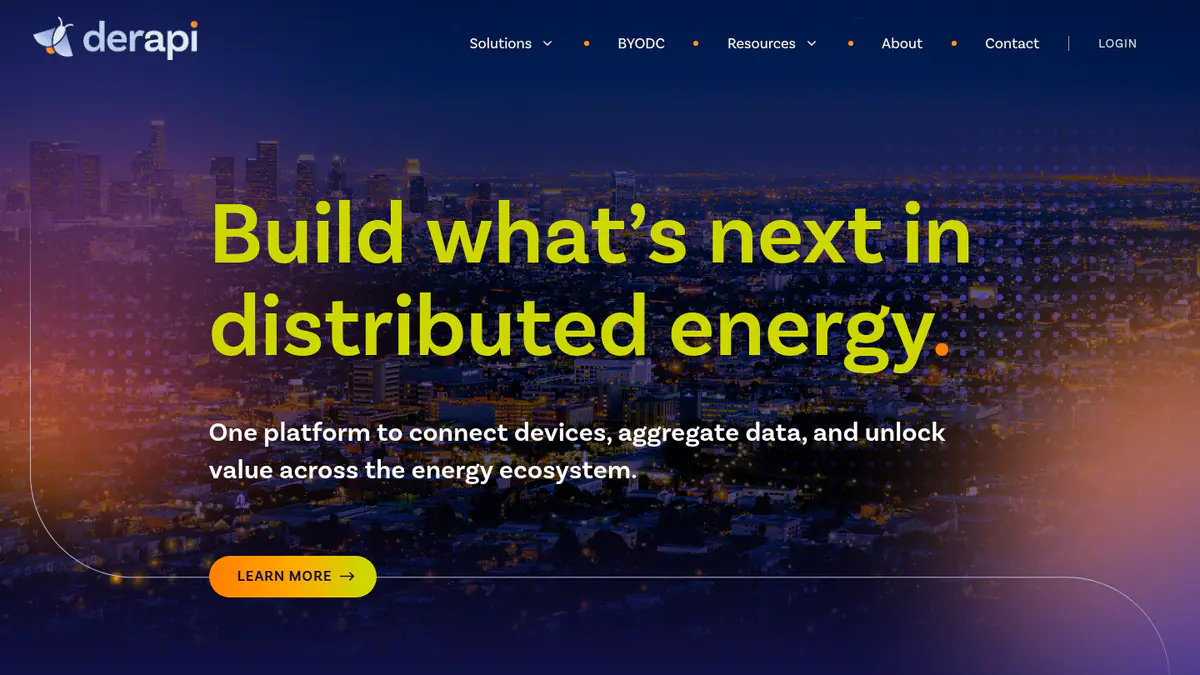
Want to see Derapi working? Book a demo with the SolarSoftwares team.
Book a demoYour request goes by email to the SolarSoftwares team. A time is set only after we reply. It does not change any score or ranking.
5. Sol-Ark VPP / MySolArk: best for Northeast US installers selling Sol-Ark hybrid systems
Best for: US installers selling Sol-Ark hybrid inverters with batteries in states with supported utility programmes. Score: 49.8/100.
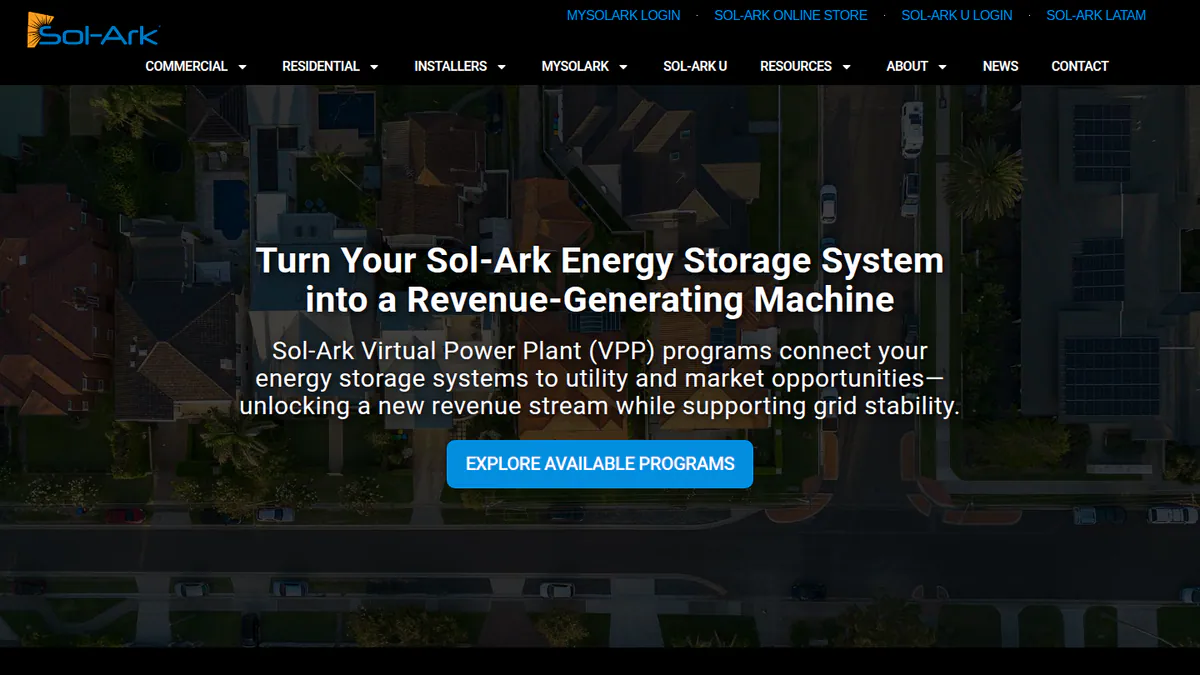
What it is: Sol-Ark’s VPP programme lets owners of a compatible Sol-Ark hybrid inverter and battery join utility VPPs. They enrol through the MySolArk V2 app and Web App. Sol-Ark’s page says pay varies by programme and is not guaranteed.
Supported programmes include Orange & Rockland, National Grid (New York and Massachusetts), Eversource (Connecticut and Massachusetts), Cape Light Compact and Rhode Island Energy. Puerto Rico and Texas are listed as coming soon. Per its VPP page, the system owner enrols, the site must be online, and it can be in one programme at a time.
Why we picked it: It gives Sol-Ark owners in-app sign-up for named Northeast utility programmes, with no fee stated. Its weak App Store rating keeps it last.
Key features:
- VPP sign-up in MySolArk V2 and the Web App.
- MySolArk Installer App (launched August 2026) with guided commissioning, a multi-site dashboard, a time-of-use builder and PDF commissioning reports.
- Web App fleet monitoring across sites.
- Alerts, performance history, faults and events.
- An installer partner programme.
Pricing: No fees stated. It needs a compatible Sol-Ark inverter and battery. Checked October 2026 on the Sol-Ark VPP page.
Pros (from App Store reviews and our research):
- Graphs give owners a good view of how the system is doing.
- Some reviewers say it works much better than the previous app.
- The 2026 Installer App lets you commission on site with a guide and watch all sites in one place.
Cons (from App Store reviews):
- Read-only: reviewers cannot control the inverter from the app.
- Frequent re-login prompts, and Face ID stopped working.
- Past data lost after migration, and "no data" shown during faults.
Reviews: Low user ratings: App Store 2.0/5 (124 ratings) for the MySolArk listing, checked October 2026. This is probably the older app. We could not find a separate rating for MySolArk V2.
Want to see Sol-Ark VPP / MySolArk working? Book a demo with the SolarSoftwares team.
Book a demoYour request goes by email to the SolarSoftwares team. A time is set only after we reply. It does not change any score or ranking.
How do the 5 VPP tools compare?
Product | What it is | Who enrols the system | Hardware lock-in | Regions | Installer revenue share published | Starting price |
|---|---|---|---|---|---|---|
Fleet VPP platform | Fleet operator | Multi-brand | US, UK, Japan | No | Quote only | |
DERMS/VPP platform plus gateways | Operator runs VPP. Accredited installer programme | Multi-brand via gateway | Australia, New Zealand | No | Quote only | |
Battery maker’s app | Homeowner (per April 2026 guide) | FranklinWH only | US | No | Free with hardware | |
Device API for programmes | Via OEM app or programme | Multi-brand (OEM partners) | US, Canada | No | Quote only | |
Inverter maker’s app | System owner | Sol-Ark only | Northeast US | No | Free with hardware |
Also considered
- Enlighten / Enphase App (scored 54.8/100, below the minimum match score): a free monitoring and installer fleet stack with remote commissioning. But the docs we checked say little about VPP sign-up. Covered in our solar monitoring apps ranking.
- Tigo EI (scored 39.0/100, a poor match for this job): module-level monitoring and commissioning for Tigo hardware, with no VPP features in its docs. See our fleet monitoring software for installers ranking.
- Not scored, by design: Reposit Power and Tesla Electric (consumer retail offers) and Amber Electric (energy retailer). EnergyHub, Uplight and WeaveGrid are paid for by utilities. Evergen, Leap and Enode are white-labelled to retailers and OEMs. None is sold to installers.
How do you choose VPP software as an installer?
- Installing in Australia or New Zealand? Talk to SwitchDin about accreditation. It is the one route here built for installers.
- As a US home installer, pick the battery by which programmes your customers’ utilities run. FranklinWH lists 25+ programmes. Sol-Ark covers named Northeast utilities.
- Sell Solis inverters in the US or Canada? Ask your distributor about VPP access through Derapi.
- If you run or finance thousands of batteries, Lunar Gridshare has the deepest track record with a national installer.
- Want a revenue share? Get it in writing from the programme operator or OEM.
- Whatever the brand, commission the system online and set up the customer’s app before you leave site. Sol-Ark’s VPP page, for example, says the system must be online to enrol.
Want more choices? Browse every tool we checked in our storage and microgrid category.
VPP software for solar installers FAQs
How can solar installers make money from virtual power plants?
Mostly indirectly, by selling and commissioning VPP-eligible batteries and inverters. As of October 2026, none of the five ranked products publishes an installer revenue share. SwitchDin’s accredited installer programme in Australia and New Zealand is the only installer route built into a VPP platform that we found.
Which batteries are eligible for VPP programmes?
It depends on the programme and utility, so check the approved-device list before you quote. As of October 2026, FranklinWH lists 25+ US utility programmes. Sol-Ark hybrid inverters with batteries can enrol with utilities such as Eversource and National Grid. Solis inverters reach US and Canadian programmes through Derapi.
What is the difference between a VPP and DERMS software?
A VPP pools home batteries, solar and loads and dispatches them as one resource. DERMS software keeps those resources within grid limits such as export and voltage, and network operators usually run it. SwitchDin, ranked second in October 2026, sells Stormcloud as DERMS and VPP control.
How do installers enrol customers in a VPP?
Usually they do not. In the docs we checked, the system owner enrols. FranklinWH’s April 2026 guidance has homeowners enrol through their own app after commissioning. Sol-Ark’s VPP page has the system owner enrol in MySolArk V2. Your job is an eligible, online, well-commissioned system.
Who pays for virtual power plant software: the installer, utility or homeowner?
Usually the utility, retailer, VPP operator or equipment maker. In October 2026, FranklinWH and Sol-Ark included VPP sign-up free with their hardware. Lunar Gridshare, SwitchDin and Derapi were sold to operators and OEMs, with no public price. Programme incentives go to the system owner.
Sources
All checked 22 to 24 October 2026.
- Lunar Gridshare: Canary Media, February 2023, mgrid, February 2026, ITOCHU release, December 2025
- SwitchDin: VPP page, installer growth programme release
- FranklinWH: San José Clean Energy programme release, enrolment guidance, April 2026
- Derapi: pv magazine USA, February 2025, Dealroom, seed round
- Sol-Ark: VPP page, MySolArk, Installer App release, App Store
- Also considered: Enphase App announcement, Tigo EI pricing
Last updated 28 October 2026. Next scheduled review: 23 January 2027.